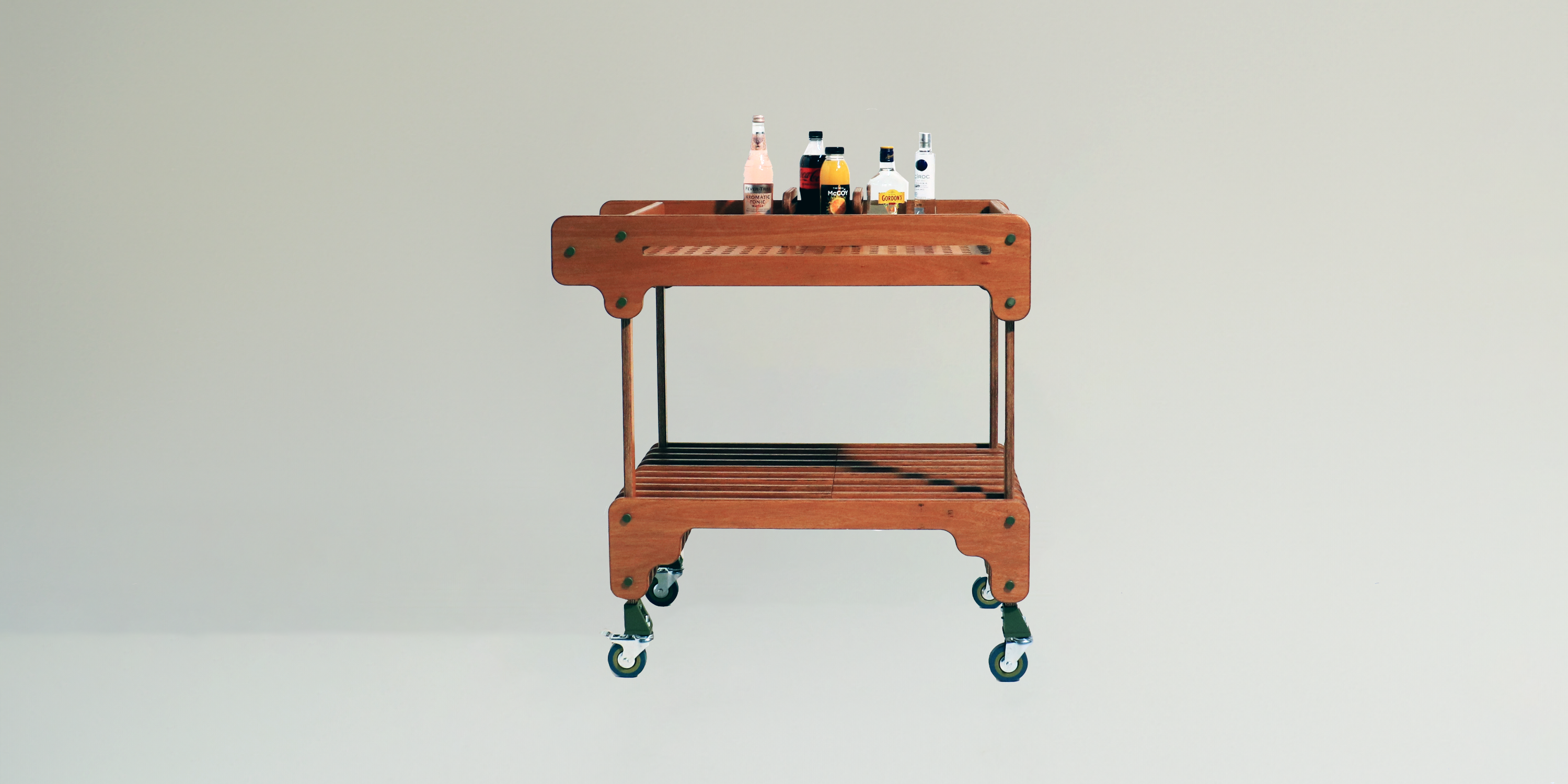
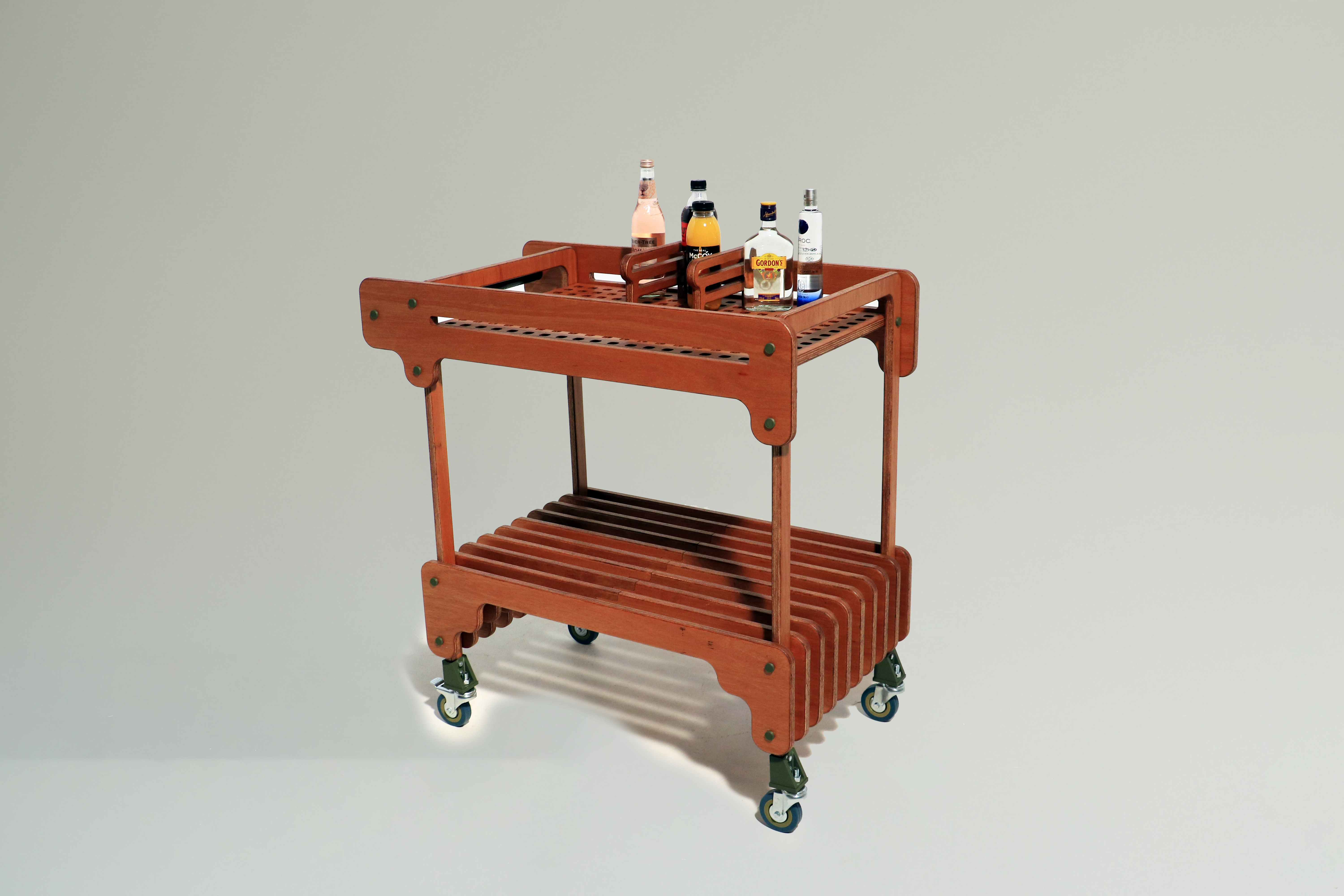
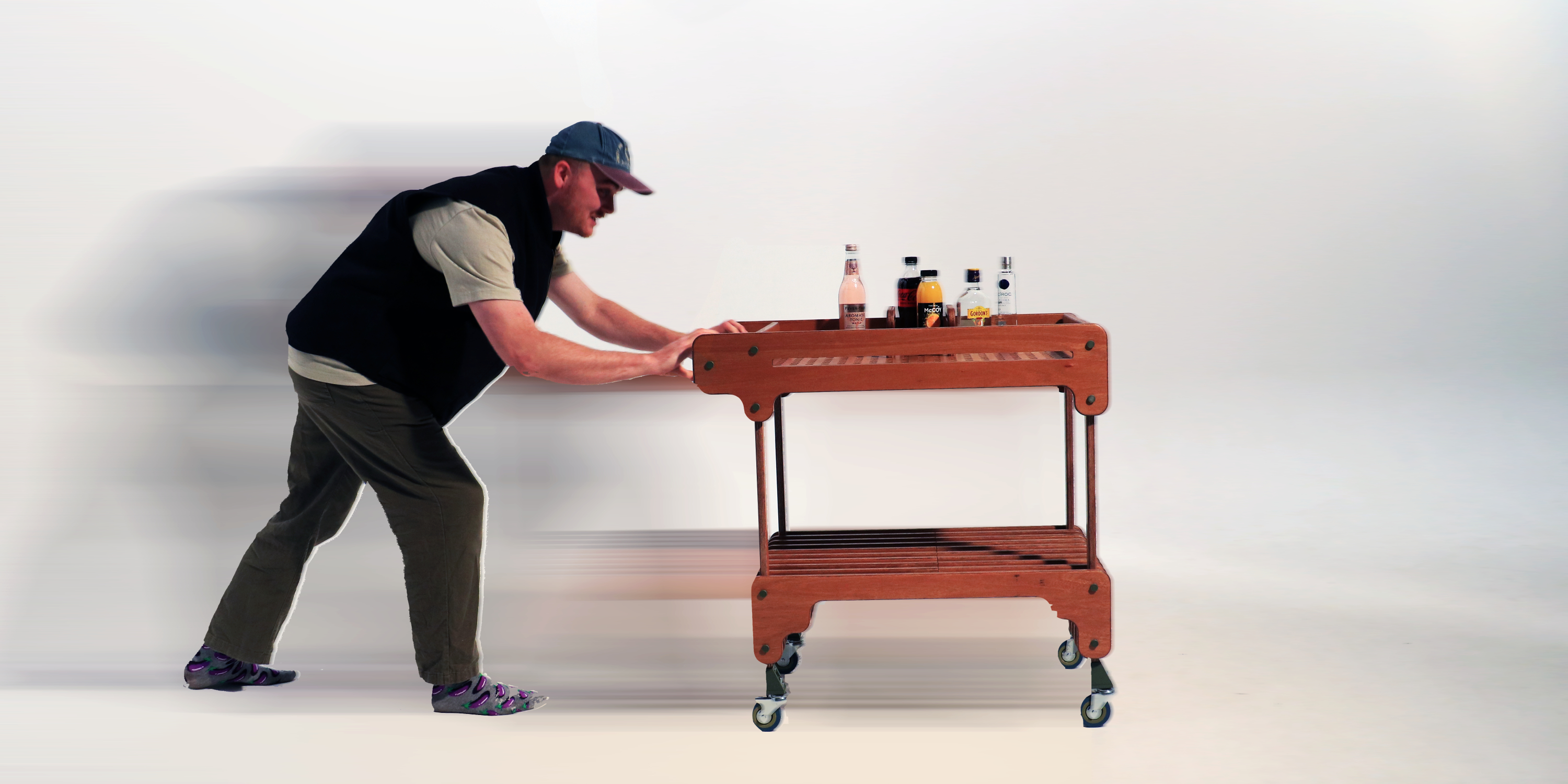
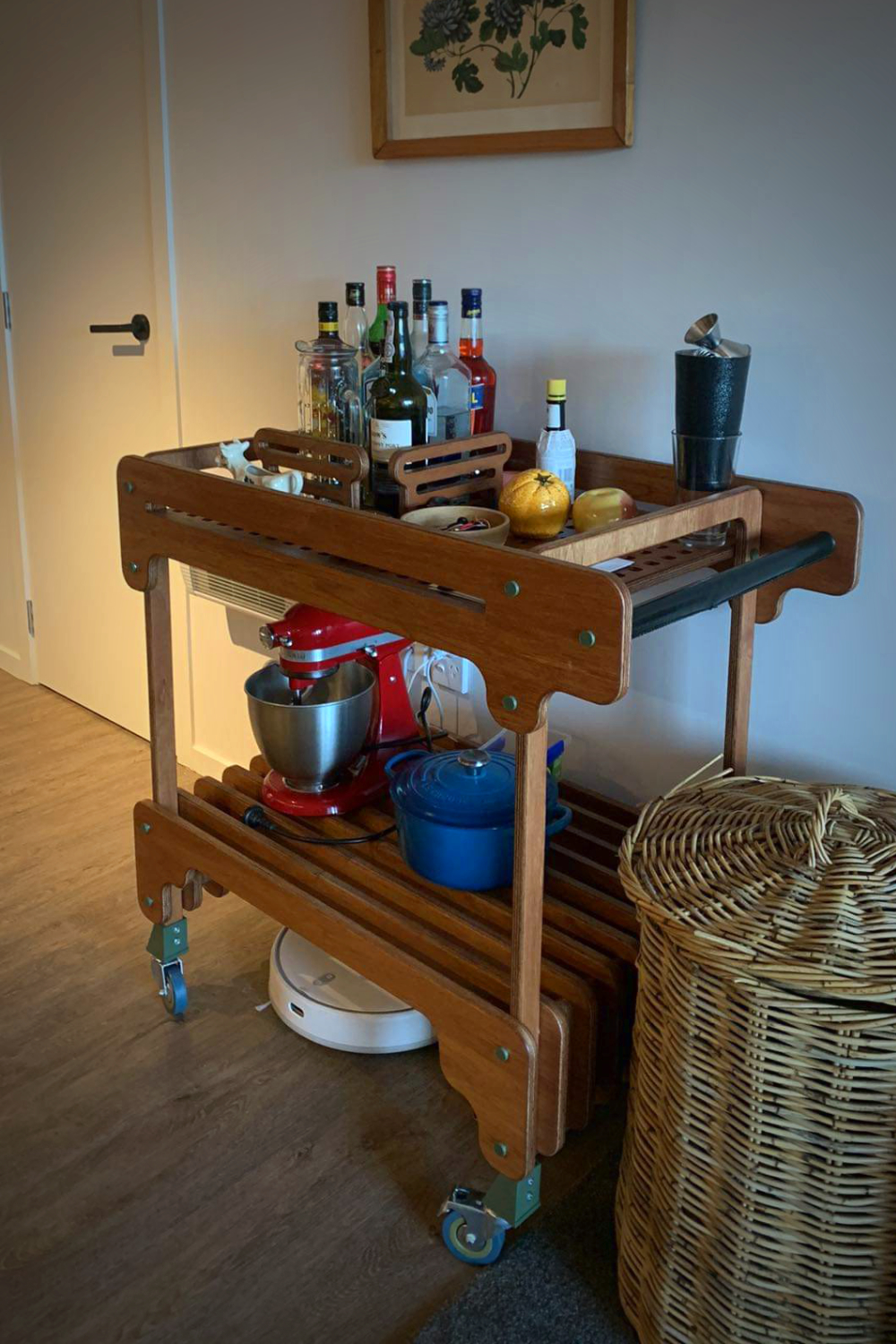
The project explores the potential of flatpack and modular furniture to improve the way products are designed, manufactured, transported and assembled. By prioritising efficient CNC production, straightforward assembly and reduced material use, Cherish aims to make furniture more practical without compromising its visual quality.
Parametric design informs the approach to customisation, creating opportunities for furniture configurations that respond to different needs and living spaces while maintaining a consistent design language.
PEDRO LESTON MARTINS
INDUSTRIAL / PRODUCT / COMPUTATIONAL DESIGN
CHERISH
FURNITURE DESIGNCherish Drinks Trolley
Flatpack Furniture / Parametric Design / CNC Manufacturing
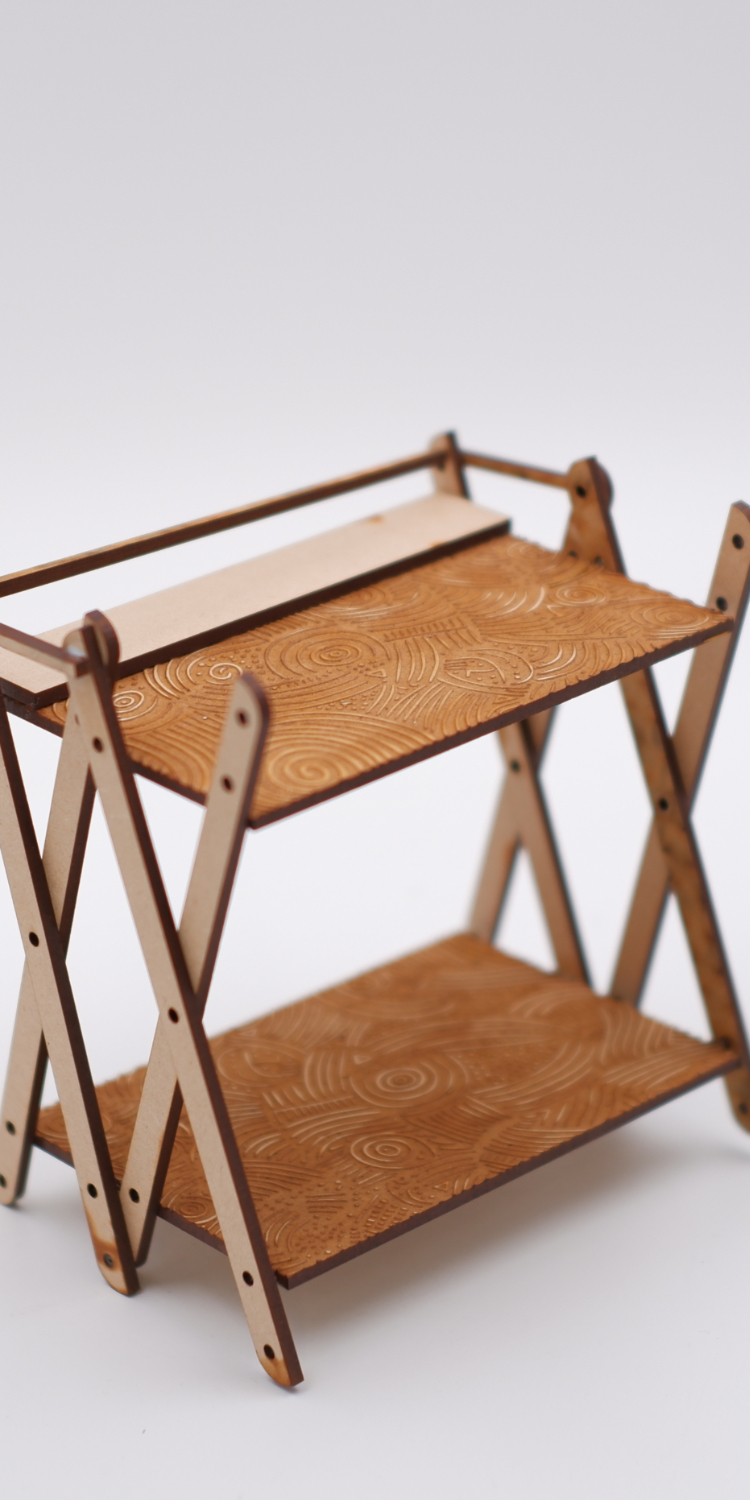
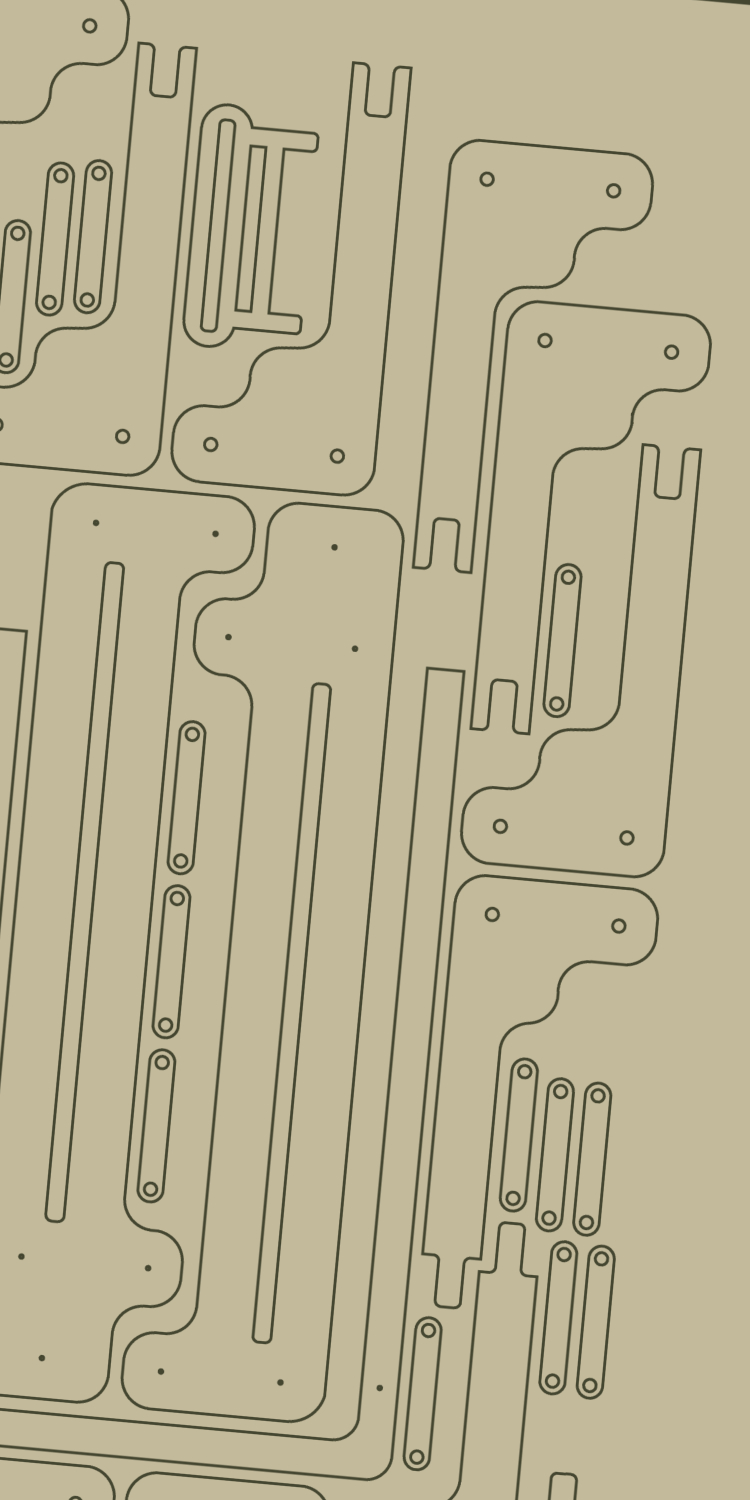
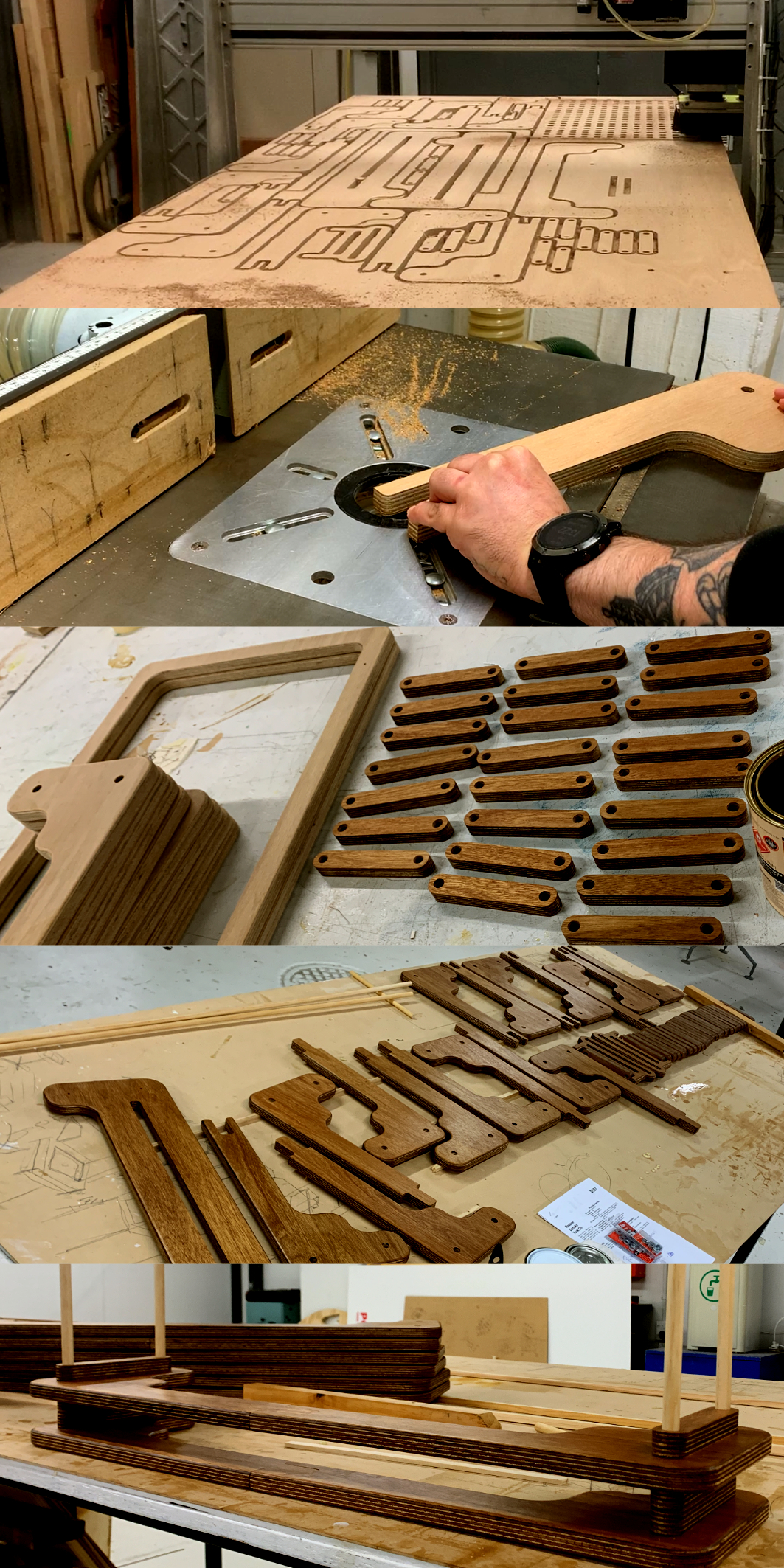
Inspired by the 2023 SaloneSatellite and the work of Gillis Lundgren, I designed a modular drinks trolley that embraces flatpack principles and CNC manufacturing. I explored various CAM techniques before selecting a router and used it to guide both the form and assembly logic of the piece. Through sketching and modelling, I developed a design that is transportable, easy to assemble, and highly customisable. The project reflects my interest in accessible, adaptable furniture rooted in manufacturing constraints and clear visual structure.
Flatpack Furniture / Parametric Design / CNC Manufacturing
Inspired by the 2023 SaloneSatellite and the work of Gillis Lundgren, I designed a modular drinks trolley that embraces flatpack principles and CNC manufacturing. I explored various CAM techniques before selecting a router and used it to guide both the form and assembly logic of the piece. Through sketching and modelling, I developed a design that is transportable, easy to assemble, and highly customisable. The project reflects my interest in accessible, adaptable furniture rooted in manufacturing constraints and clear visual structure.
RETHINKING FLATPACK FURNITURE
DESIGN REFINEMENT
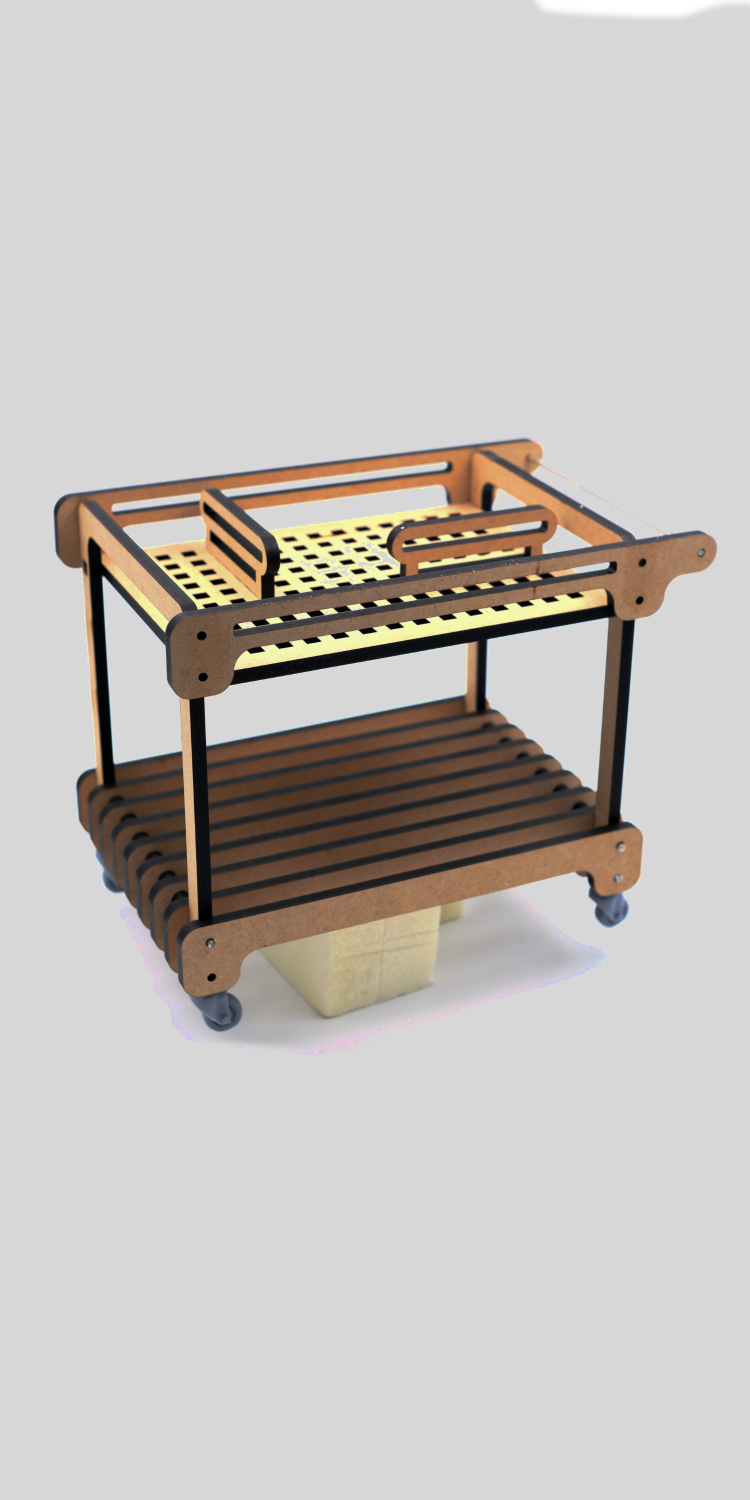
The design was refined to improve its proportions, ergonomics and overall visual balance while reducing unnecessary bulk. Removing the bottom shelf improved clearance and made movement around the trolley easier.
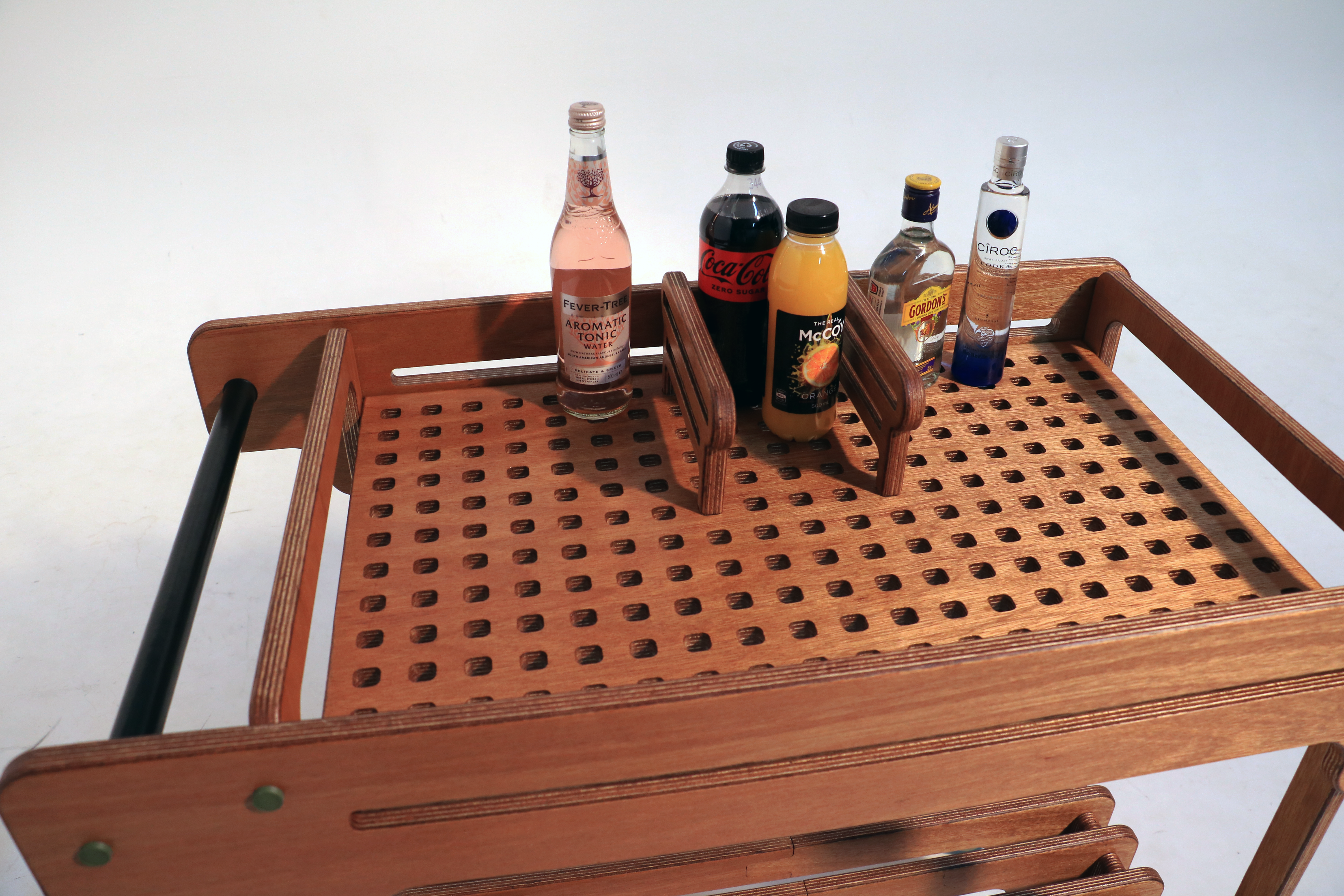
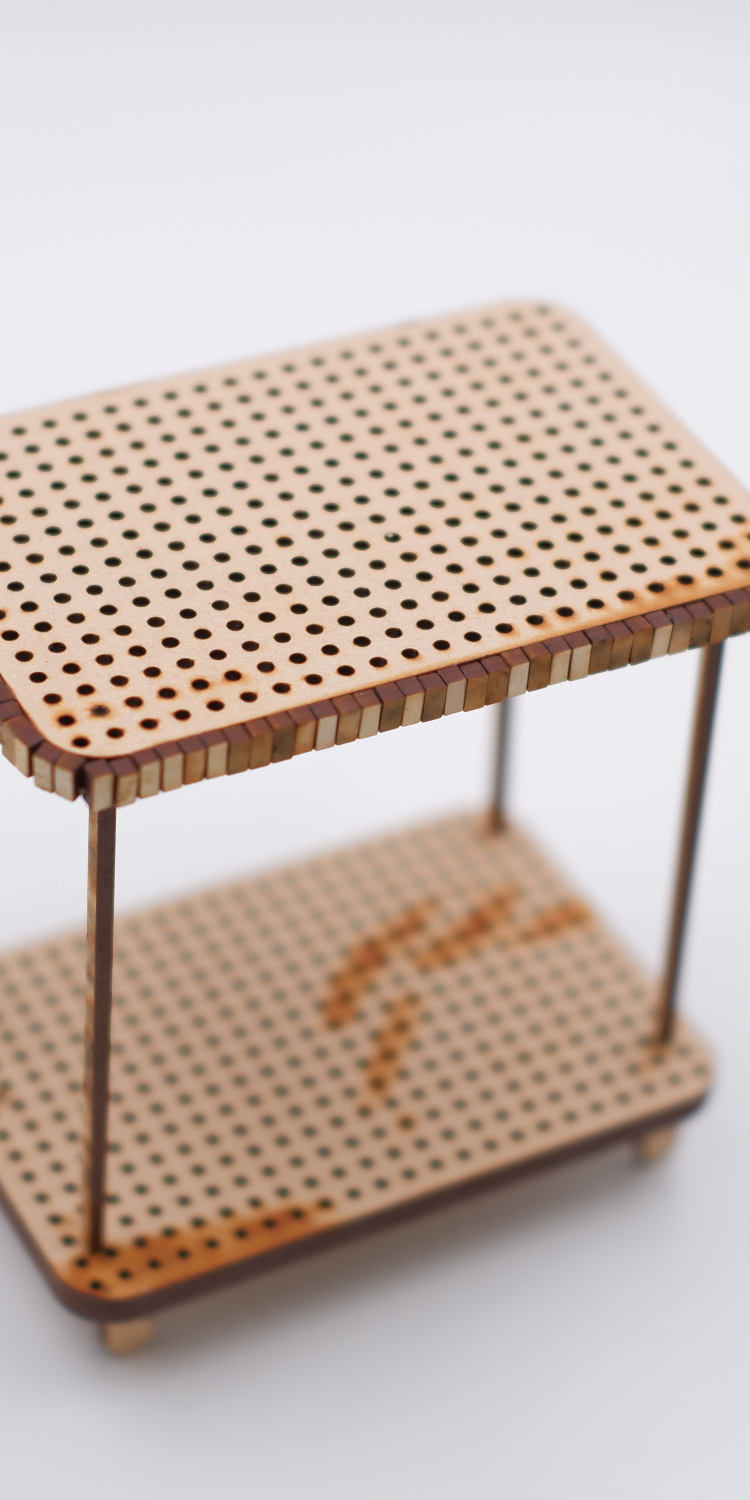
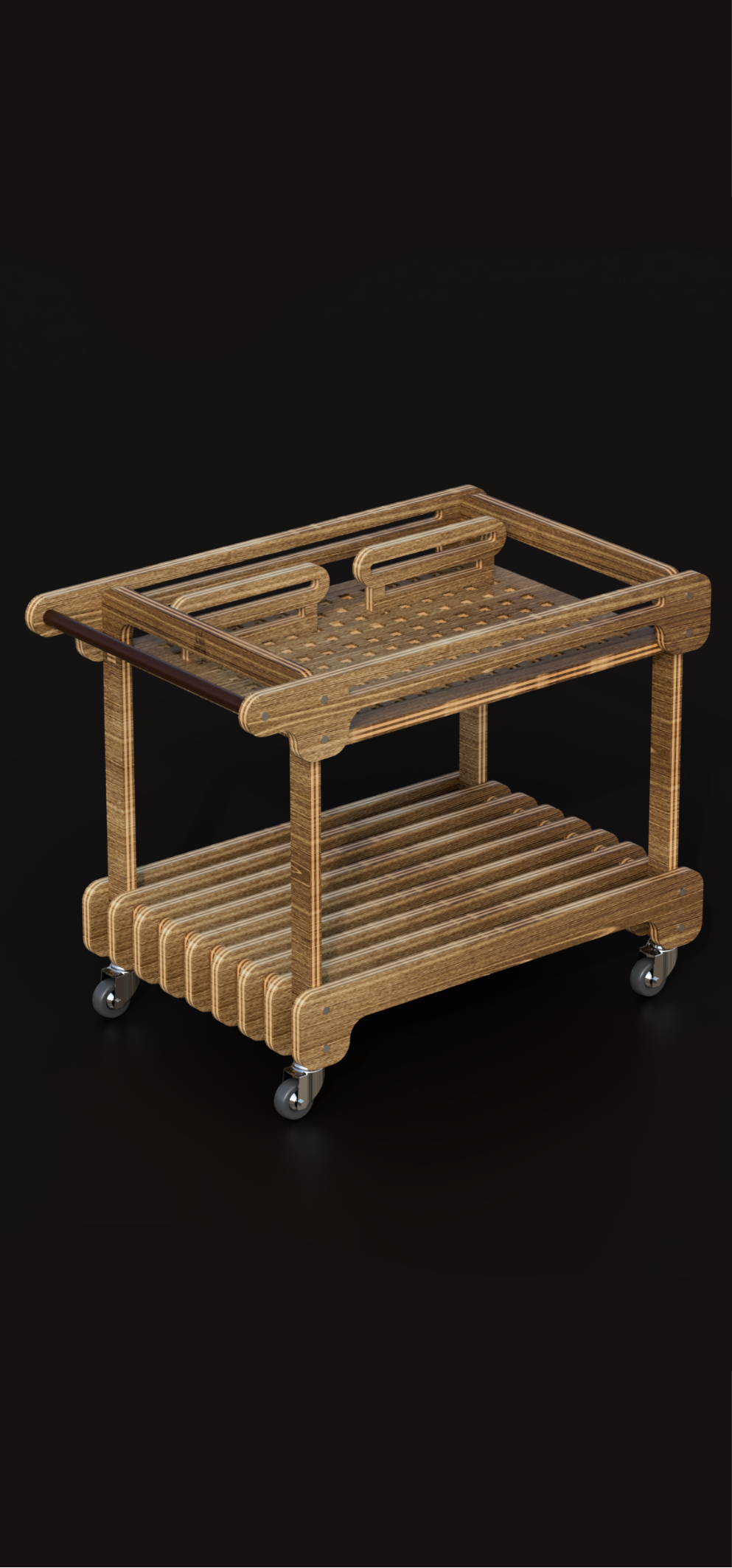
The tray was lowered and redesigned with a surrounding edge and a perforated surface. Removable dividers slot into the perforations, allowing items to be organised and separated according to different needs. Integrated slots on the sides provide convenient towel storage.
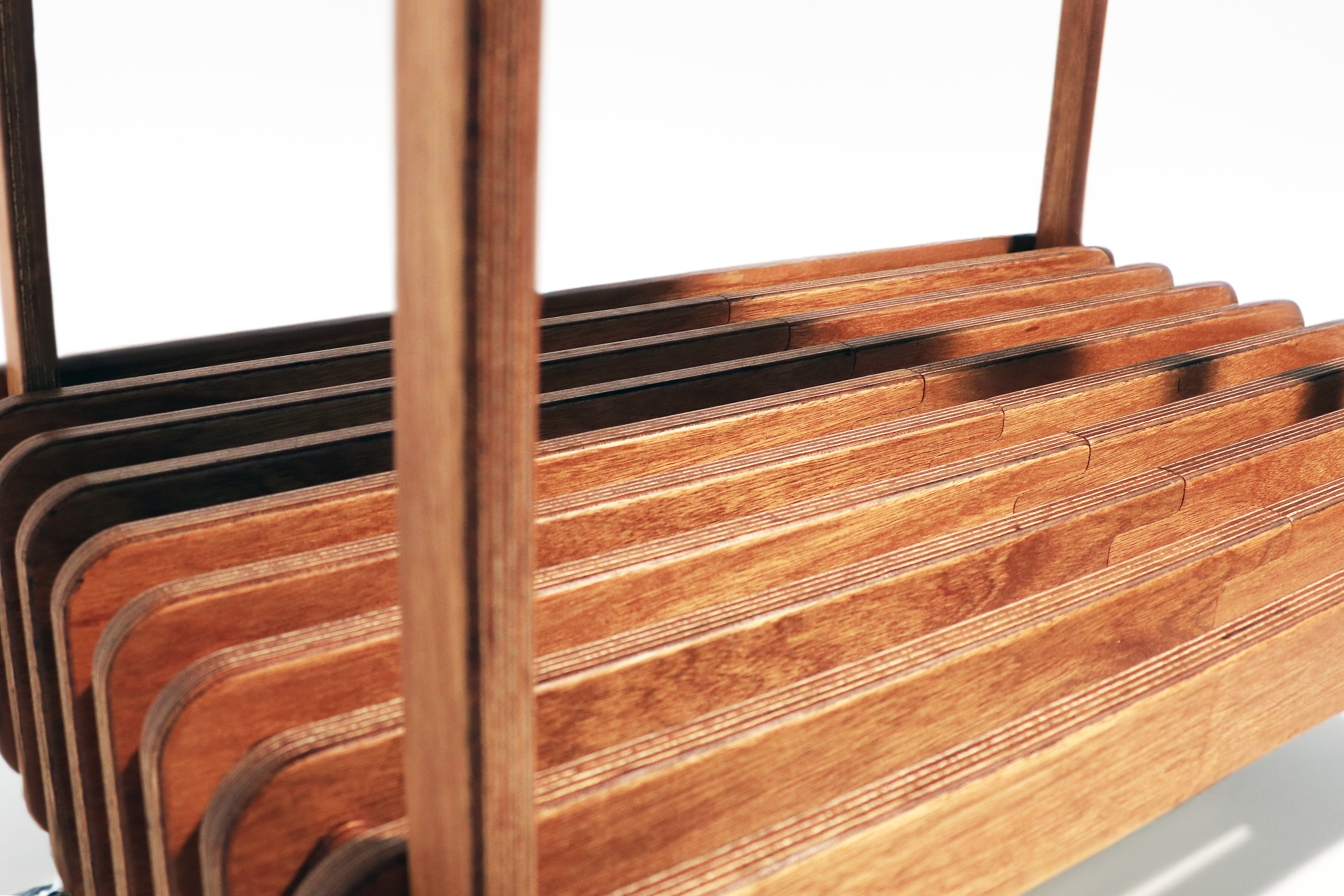
The tray attachment system was also reworked to simplify assembly and strengthen the structure. These refinements reduce excess material and weight while improving the trolley's functionality, stability and ease of use.
The tray was lowered and redesigned with a surrounding edge and a perforated surface. Removable dividers slot into the perforations, allowing items to be organised and separated according to different needs. Integrated slots on the sides provide convenient towel storage.
The tray attachment system was also reworked to simplify assembly and strengthen the structure. These refinements reduce excess material and weight while improving the trolley's functionality, stability and ease of use.
DIGITAL SKETCHES & MODELS
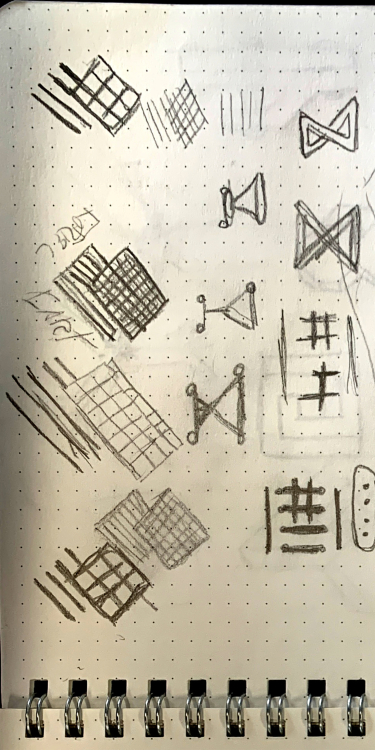
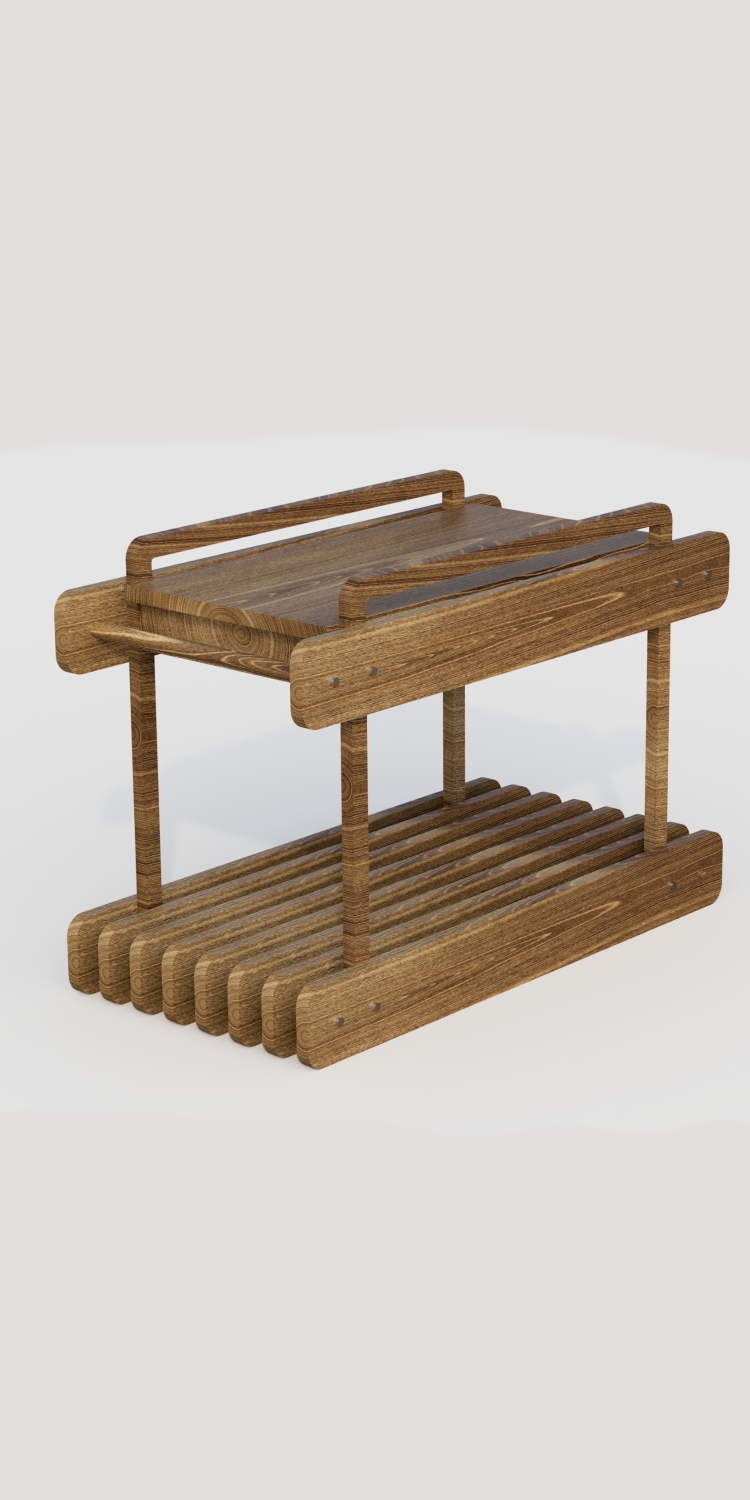
Digital sketches and 3D modelling were used to explore the trolley's form, proportions and functional details. Iterative refinement helped balance usability with a minimalist aesthetic while developing a structure suited to flatpack assembly and CNC manufacturing.
The design process focused on the relationship between modular components, efficient material use and practical construction. The perforated tray, removable dividers and revised connections bring flexibility to the final design while maintaining a cohesive product language.
The design process focused on the relationship between modular components, efficient material use and practical construction. The perforated tray, removable dividers and revised connections bring flexibility to the final design while maintaining a cohesive product language.
FINAL WORK